MAMMALS

Brown bears in Katmai National Park, Alaska. If these same bears were found in the interior of Alaska, they would be called Grizzly bears.


Oh, no! I went the wrong way. Wait for me.

Sorry mom. Please don’t get mad at me.

Six bears are on this steep hill above a grassy meadow and beach.

This young bear is enjoying the stems of cow-parsnips. These are an important plant for bears and other herbivores.

Elephant greeting. Young elephants greet each other by touching their trunks. Kruger Park, South Africa.

Resting a tired trunk. An elephant has 40,000 muscles just in her trunk, while a human has 639 in her entire body.
Her trunk is so strong it can lift 770 lbs.

African elephants have two finger-like tips on their trunk so they can pick up small objects and give their eye a careful rub.
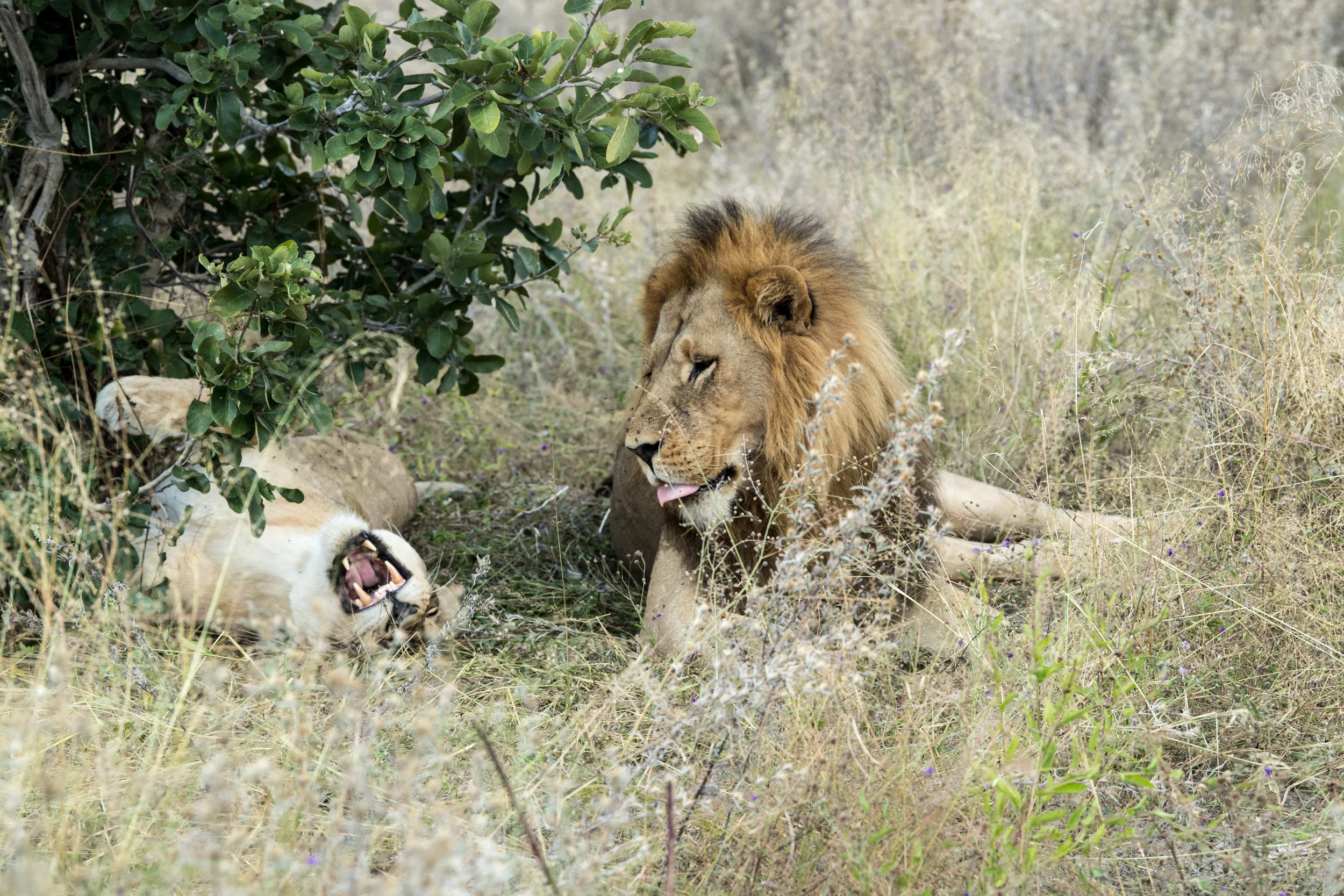
A lion pair rest after coitus. Lions will mate multiple times a day for several days without stopping to eat.

A young male lion in the Okavango Delta.

In the heat of the day a three year old lion seeks rest in the cool shade.

Near Nome, Alaska a large bull Musk Ox stands watching on a hill covered with lichen and flowers while the rest of the heard eats. His winter coat is shedding and the warm wool will be collected, spun, and knitted into extremely warm hats and scarves.

The largest population of Southern Sea Otters is found in the Elkhorn Slough, located off Monterey Bay in California. They are listed as “threatened” on the IUCN (International Union for Conservation) list. Although the population is rising, sea otters need continued protection to prevent their extinction in the wild.. The Monterey Bay Aquarium has exhibits of these otters and continues to monitor their recovery.

Southern Sea Otters A mother and pup are nose-to-nose in Elkhorne Slough, a designated “Wetland of International

Southern Sea Otters. Elkhorne Slough, CA.