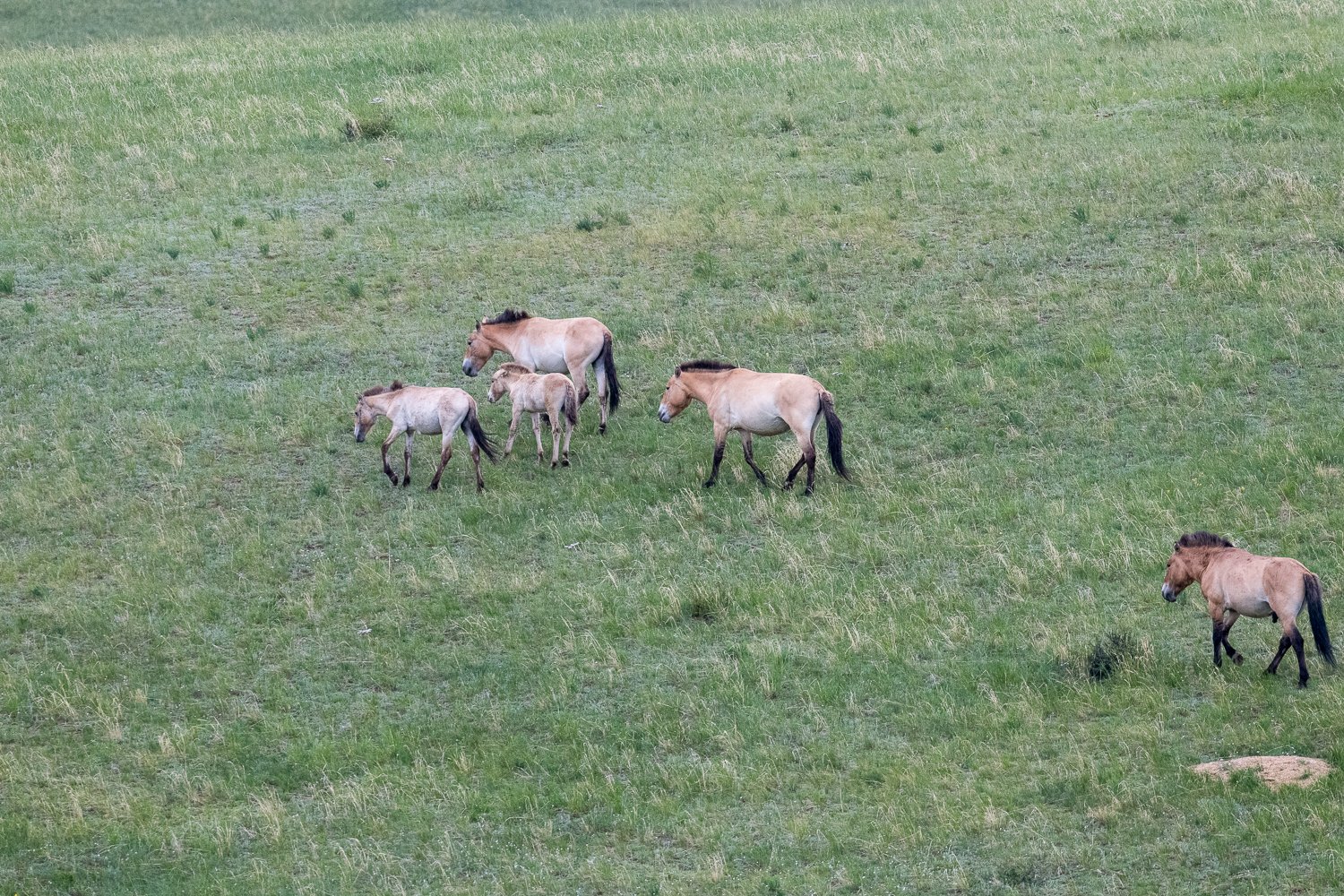
Przewalski’s Horse
In 1959 a German zoologist assembled a studbook for Przewalski’s horse. It is maintained by the Prague Zoo and is one of the oldest pedigree studbooks in the zoo world. Both the Foundation for the Preservation and Protection of the Przewalski’s Horse, started in 1972, and the Mongolian Association for Conservation of Nature and the Environment were instrumental in the reintroduction and protection of the Przewalski’’s Horse. By 1965 there were 134 takhi (the native name) living in zoos and private parks.
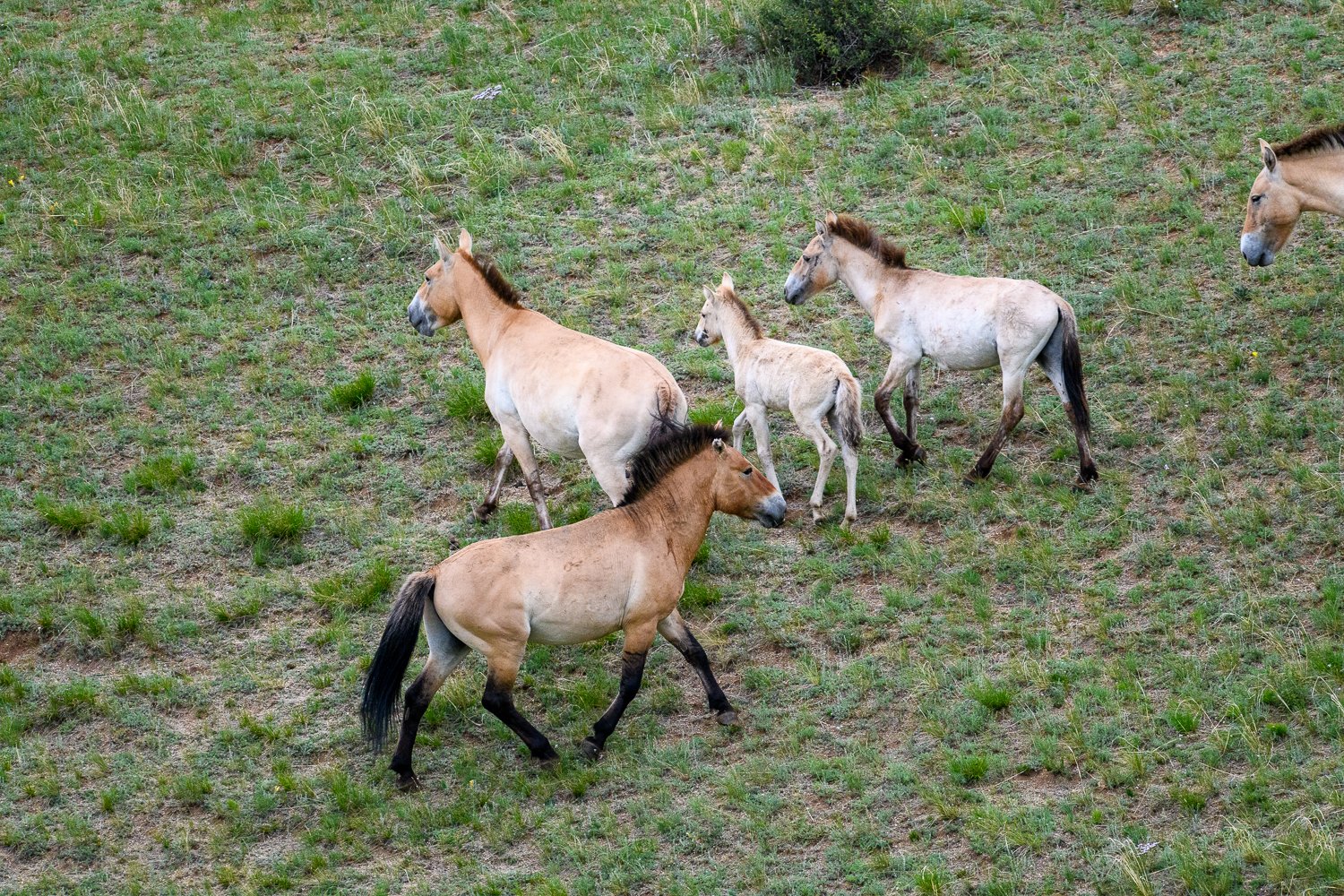
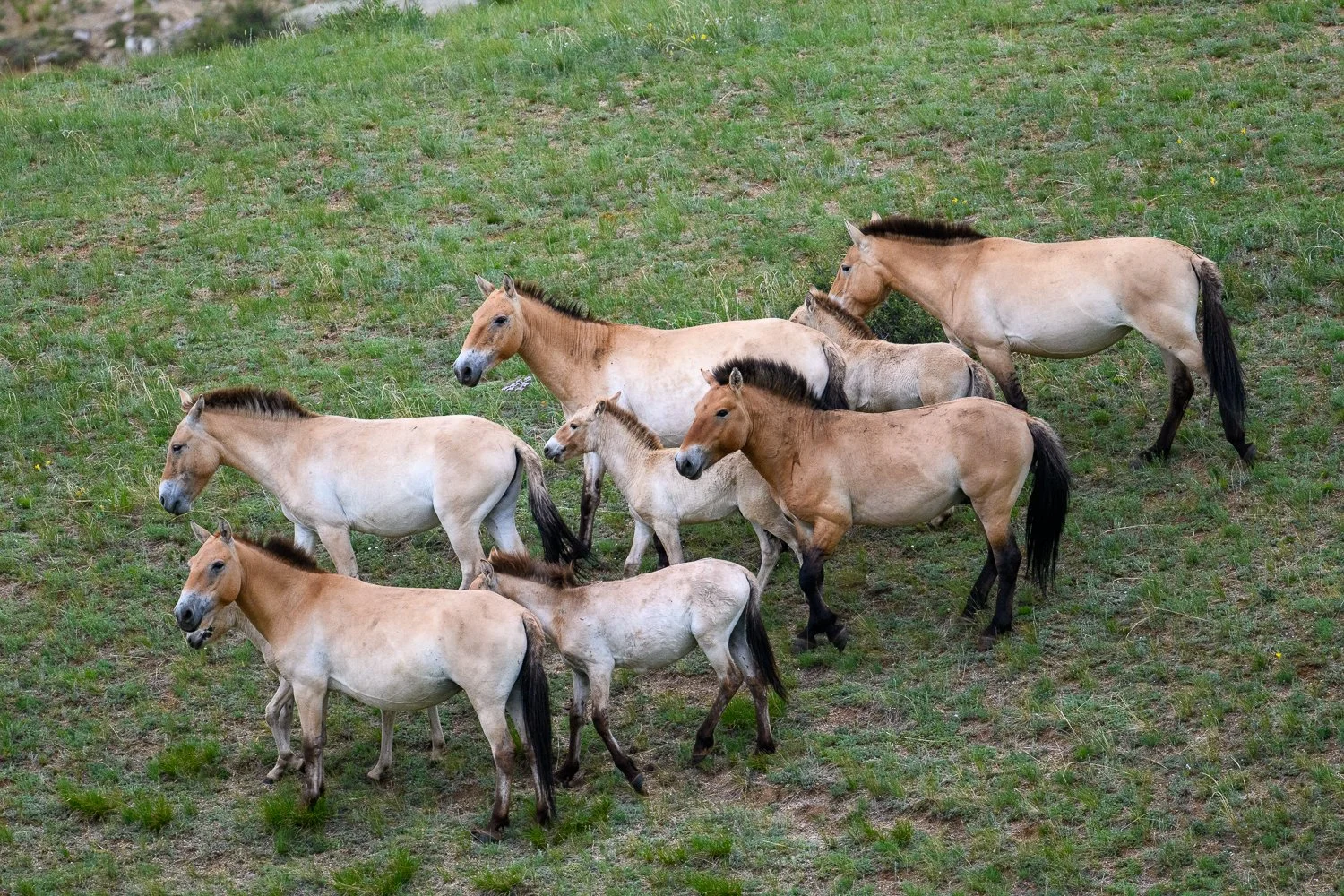
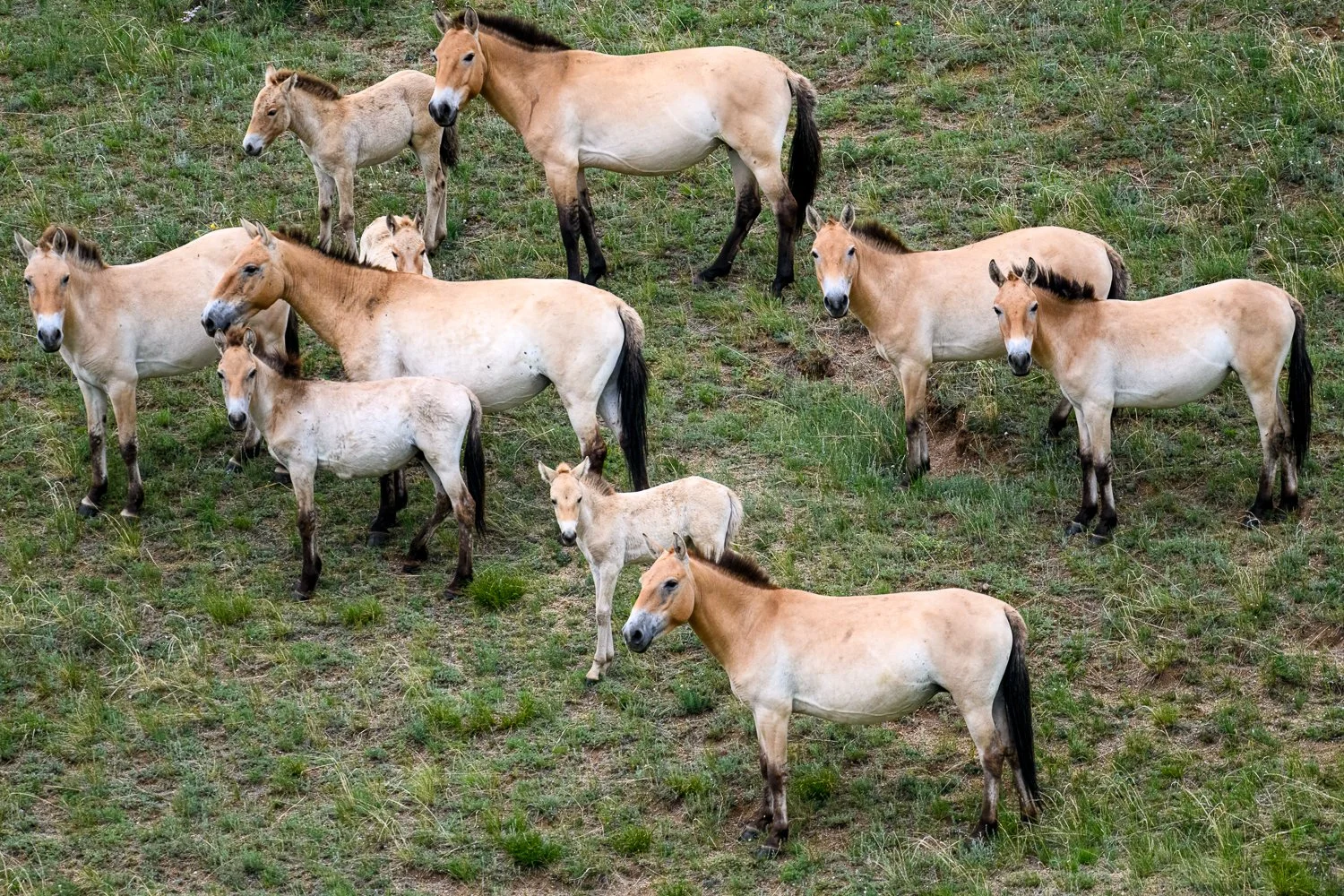
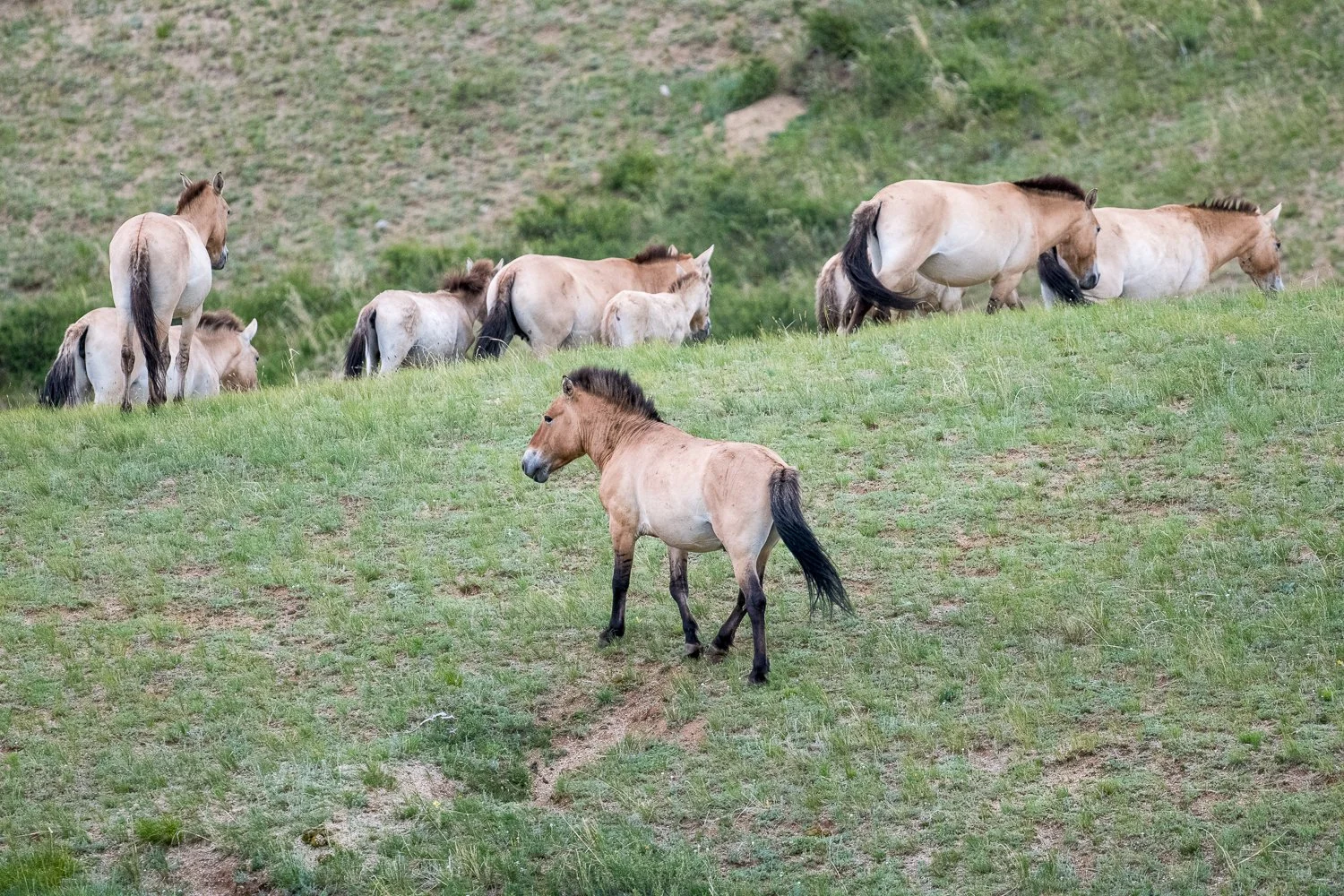
On June 5th, 1992, the first 16 takhi arrived in Hustai National Park (HNP) in Mongolia to be reintroduced to their native territory. There are now 380 takhi including “34 breeding harems and more than 80 young stallions. Mongolia is the only place in the world where Przewalski’s horses exist within their historic range; HNP is home to the world’s largest number of Przewalski’s horses in the wild.” (HNP website)
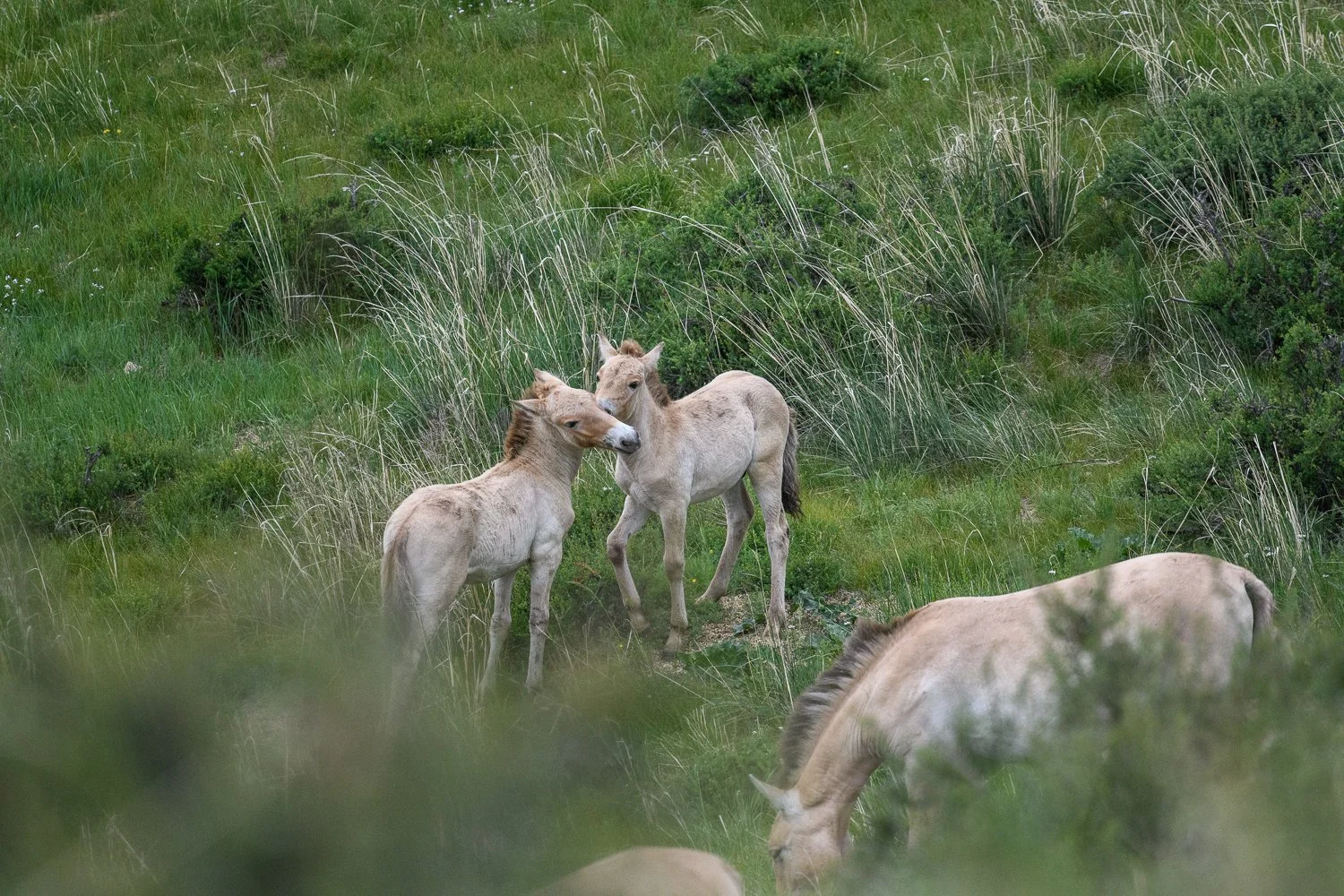
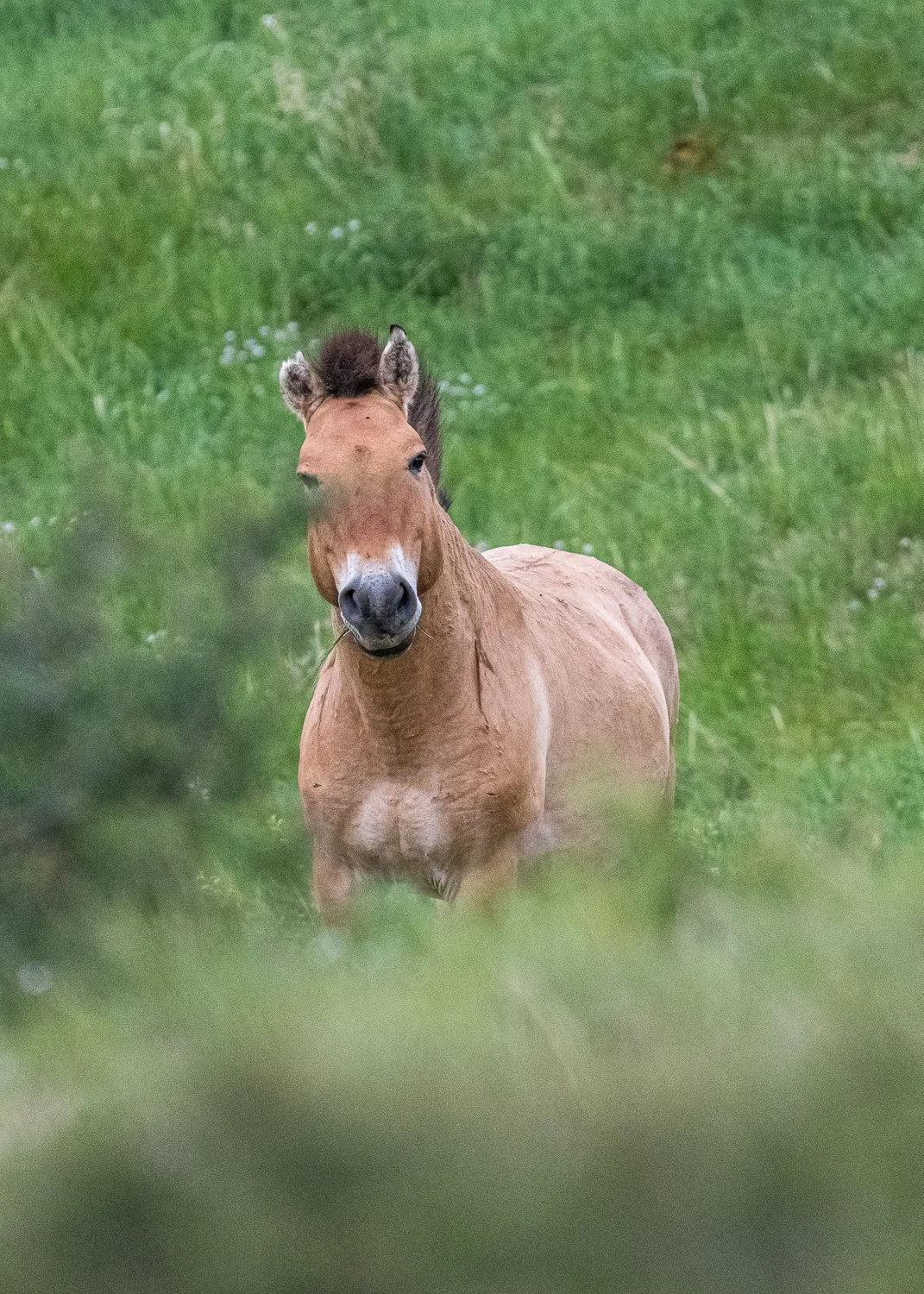
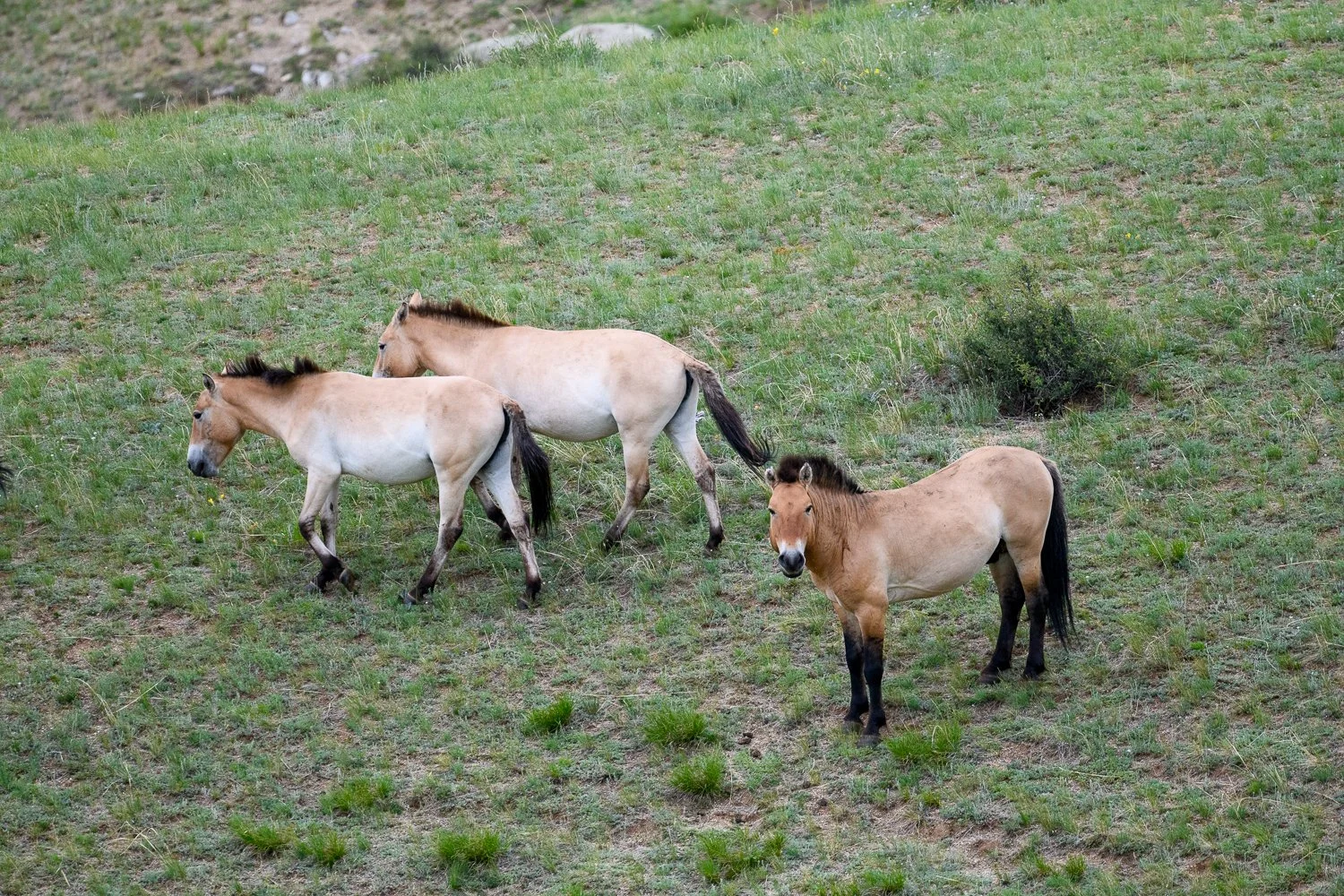
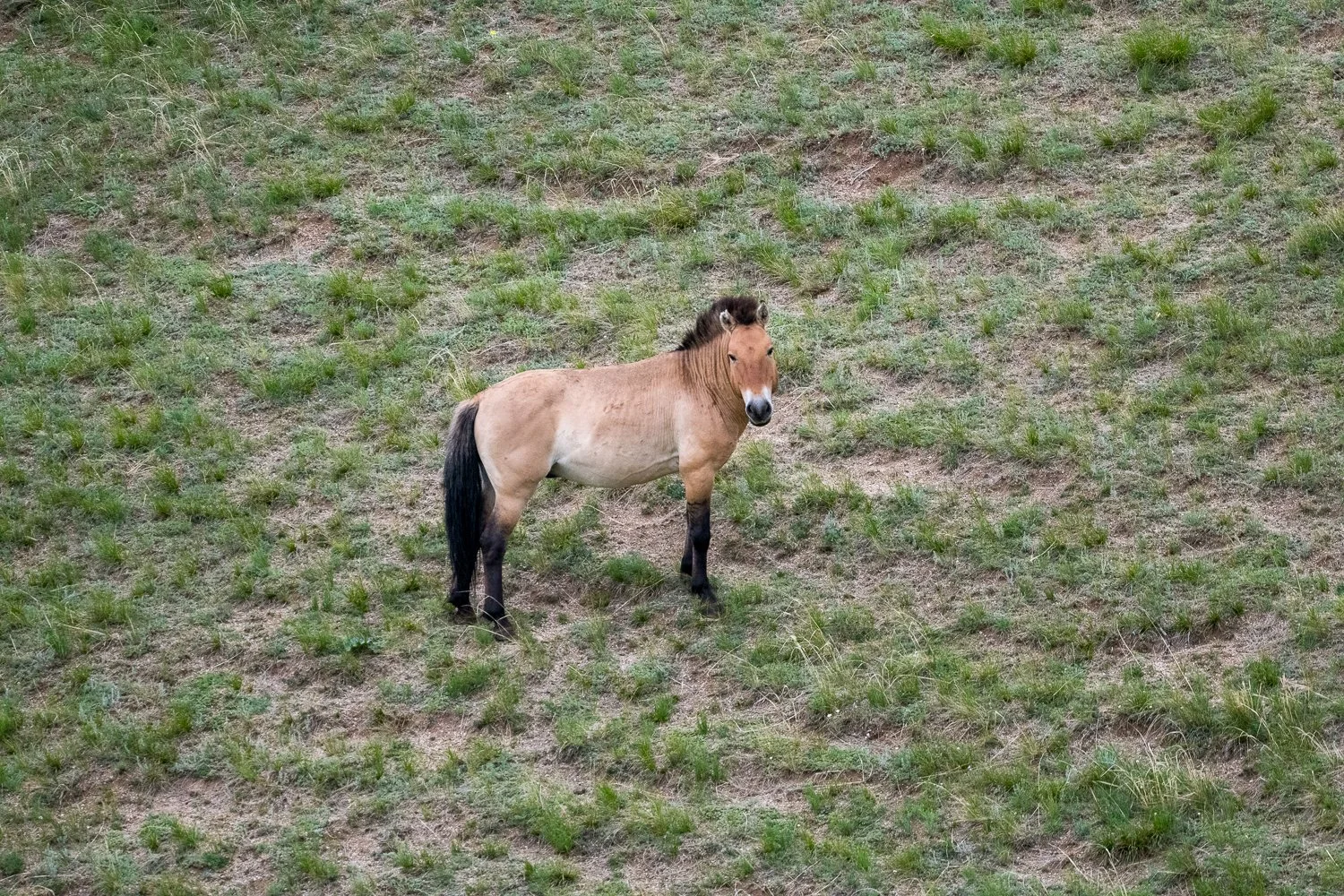
Although domesticated animals come in a variety of colors, due to artificial selection, wild horses do not. They have dun-colored coats with zebroid stripes on their hocks and a dorsal stripe that runs along their backbone from shoulder to tail. Their erect manes and tails are shed once a year and they have no forelock. The takhi and the domestic horse descended over 500,000 years ago from a common ancestor that is now extinct. Interestingly, the Przewalski’s horse has 66 chromosomes and the domestic horse has only 64. The Przewalski’s horse is too wild to be ridden.
“…Mongolia has stated internationally that it will conserve up to 30 per cent of its territory specifically in supporting its biodiversity conservation…” (HNP website) Further thanks for the above information goes to Smithsonian Magazine, Mongolia, by Jane Blunden and the Hustai National Park exhibits and website.